
Work from home job scams have quietly become one of the most common frauds going, and the reason is simple: they don’t look like scams anymore. The listings are well written. The company websites look real. The recruiter is friendly, responsive, and says all the right things about flexibility and work-life balance.

I’ve been writing about remote work for years now, and the messages I get have changed. It used to be “is this too good to be true?” Now it’s “I already sent them my details, what do I do?”
So this is the article I wish everyone read first. Nine red flags, how to check a job is real before you hand anything over, and what to do if you’ve already been caught out.
Why work from home job scams are so much harder to spot now
Scammers used to give themselves away with bad spelling and dodgy formatting. That tell is gone. Anyone can generate a polished job listing in seconds, clone a company’s careers page, and run a convincing conversation over text. That’s exactly what makes today’s work from home job scams so convincing.
They’ve also got smarter about where they fish. Fake listings now appear on the same job boards as real ones, and scammers scrape public resumes to reach out directly — which is why so many of these start with a message you didn’t ask for.
The good news is that the underlying tricks haven’t changed. Scammers still need one of two things from you: your money, or enough personal information to take it later. Every red flag below is a symptom of one of those two goals.
9 red flags of a work from home job scam
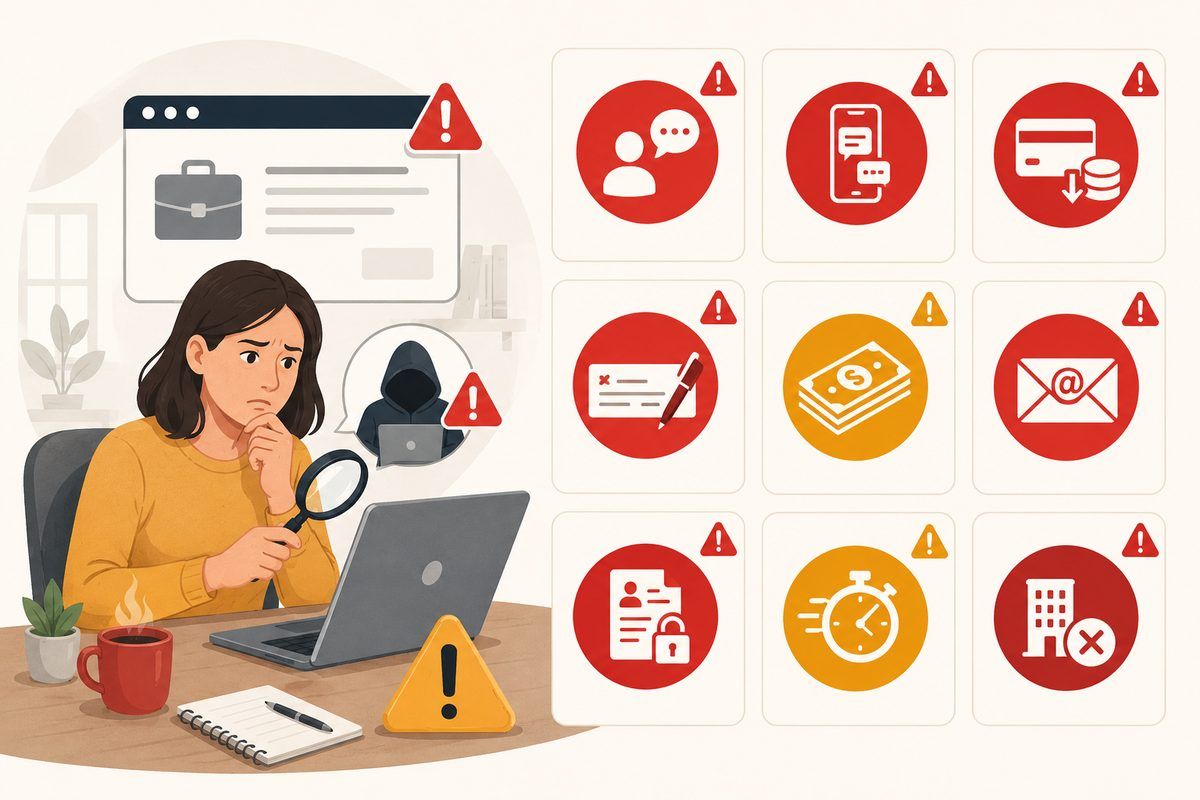
1. They contacted you about a job you never applied for
Real recruiters do reach out — but they’ll reference something specific, like your actual work history or a profile you’ve made public. A generic message about a “remote position” you have no memory of applying for is the single most common way these start. This is one of the classic openers used in work from home job scams.
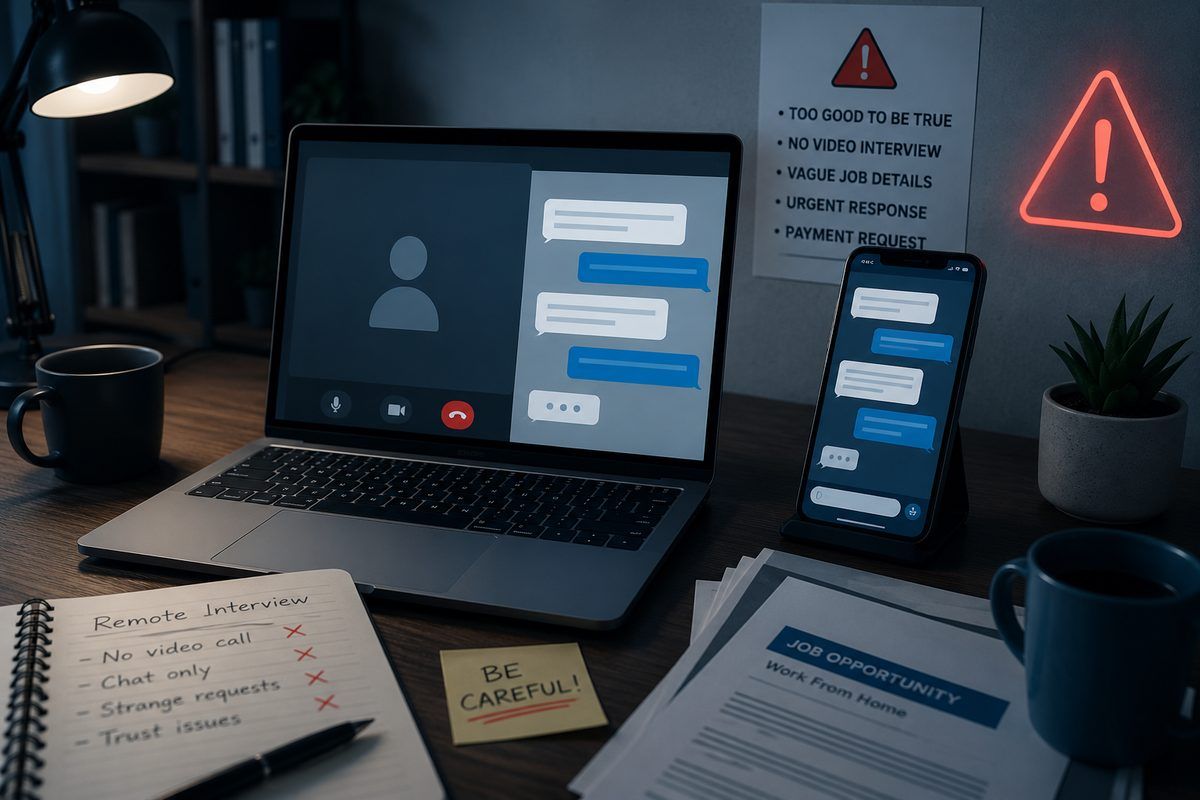
2. The entire process happens over text
If the interview is conducted by message on Telegram, Signal, WhatsApp, or Google Chat, and nobody will get on a video call, that’s your answer. Legitimate employers hire people they’ve spoken to. Scammers avoid anything that puts a real face and voice on record.
3. You’re asked to pay for anything
Equipment. Training. Software licences. A background check. Starter kits. It doesn’t matter how reasonable the explanation is — you should never pay money to start a job. Employers cover the cost of employing you. This one rule alone would prevent most losses. Upfront fees are one of the clearest signs of work from home job scams in action.
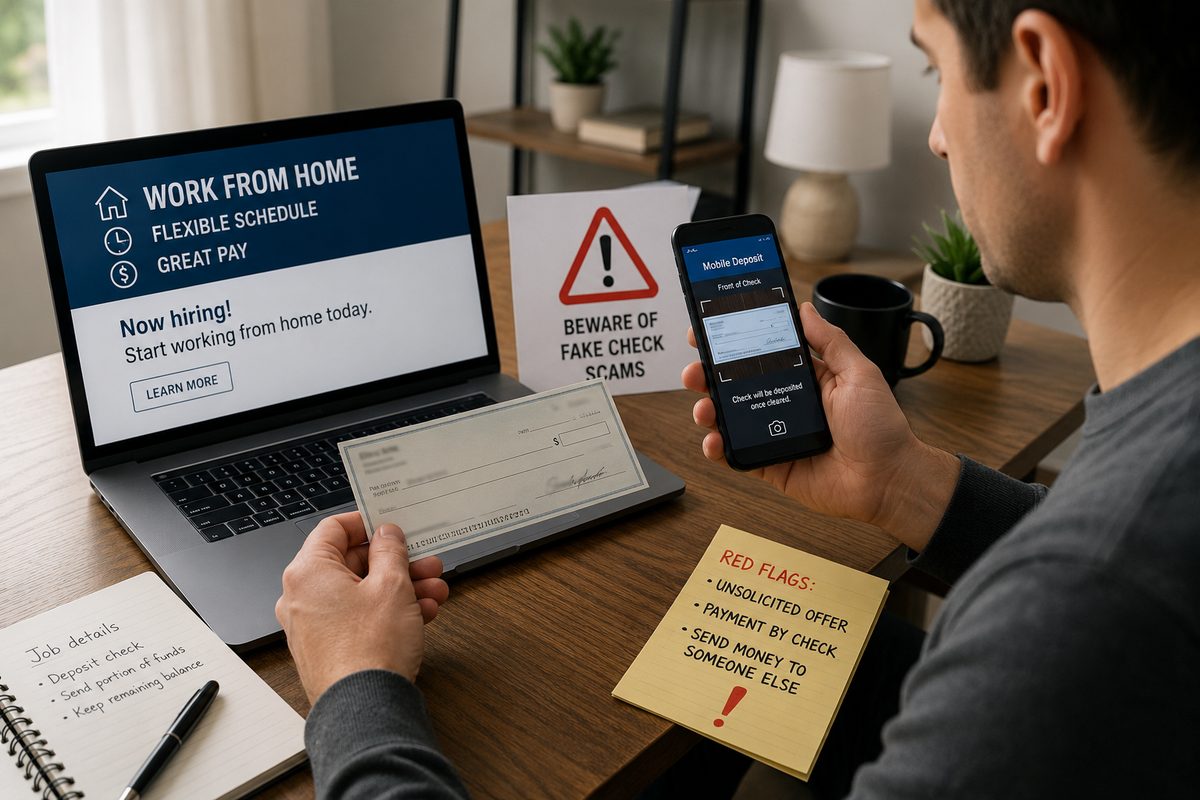
4. They send you a cheque before you’ve done any work
This is the fake cheque scam and it catches careful people, because it exploits how banks work rather than how gullible you are. The cheque arrives, you deposit it, your bank makes the funds available within a day or two, and you’re asked to forward part of it on to buy equipment from their “vendor.” A week later the cheque bounces, and the money you sent is gone — but the bank still wants its funds back from you. Available is not the same as cleared.
5. The pay doesn’t match the work
$40 an hour for basic data entry with no experience needed. $900 a week for a few hours of “product testing.” When the pay is dramatically above the going rate for the skill involved, the money isn’t the job — you are.
6. The email address doesn’t match the company
Check the bit after the @ symbol, and check it carefully. Real companies email you from their own domain. Watch for free addresses like Gmail, and for lookalike domains with an extra letter, a hyphen, or a different ending — careers-microsoft.co is not Microsoft.
7. They want sensitive details before there’s a formal offer
Your Social Security number, bank account, or a photo of your driver’s licence are all things a genuine employer needs eventually — after a written offer, through a proper onboarding system, usually on tax forms. Being asked for them during a chat interview is identity theft in progress.
8. Everything is urgent
The position is filling fast. They need your details today. There are only two spots left. Manufactured urgency is designed to stop you doing the ten minutes of checking that would expose the whole thing, and it’s a feature of nearly every scam I’ve looked at.
9. The role doesn’t exist anywhere else
Search the exact job title alongside the company name. A real opening usually appears on the company’s own careers page and often on several job boards. If the only place it exists is the message in your inbox, that’s because that’s the only place it exists. A quick search like this catches a surprising number of work from home job scams before you waste any time on them.
How to check a work from home job is legitimate
Three checks, ten minutes, and you’ll catch almost everything.
Go to the company directly. Don’t click the link you were sent. Type the company name into a search engine yourself, open their real website, and find their careers page. If the role isn’t listed there, contact the company through the details on their own site and ask.
Look up the recruiter. A real recruiter has a professional history you can find — a LinkedIn profile with a work record, connections, and some age to the account. A profile created last month with a stock photo and no history is not a person.
Search the company name with the word “scam.” It sounds crude and it works. If the name has been used in a scam before, someone has usually posted about it on Reddit or a consumer forum already.
And then trust the feeling. Nearly everyone who writes to me about this says some version of “something felt off but I talked myself out of it.” That feeling is worth more than any checklist.
What to do if you’ve already been caught
First: this is not a character flaw. These are organised operations run by people doing this full time, and they target hope. Being hopeful about finding work is not a mistake.
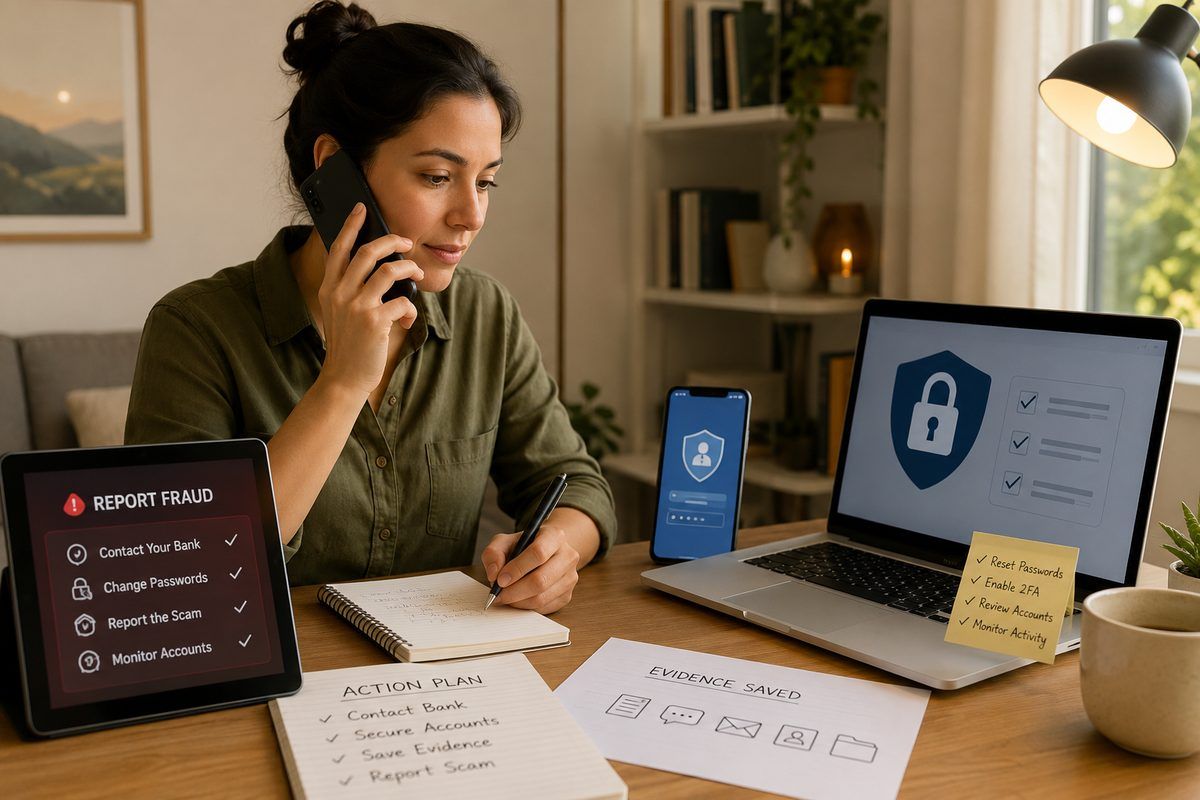
Then move quickly.
- If you sent money or deposited a cheque, call your bank straight away and tell them you believe you’ve been scammed. Speed matters more than anything else here.
- If you shared your Social Security number or bank details, place a free credit freeze with all three credit bureaus — Equifax, Experian and TransUnion — and check your report at annualcreditreport.com.
- Report it. File with the FTC at reportfraud.ftc.gov and the FBI’s Internet Crime Complaint Center at ic3.gov. Reports genuinely do get these operations shut down, and they help the next person.
- Keep everything. Screenshot the messages, the listing, and the profile before they disappear, which they will.
Work from home job scams: frequently asked questions
What is the biggest red flag of a work from home job scam?
Being asked to pay for anything. Legitimate employers cover equipment, training, software and background checks. If a company asks you to pay for a starter kit, a licence, or your own screening before you begin work, it is a scam — no exceptions.
Do real employers interview you over text?
Rarely, and never exclusively. Real hiring involves a phone or video conversation at some point. If the whole process happens on Telegram, Signal or WhatsApp and nobody will appear on camera, the person is avoiding leaving a record of their face and voice.
Can you be scammed by a check your bank has already accepted?
Yes. Banks often make deposited funds available within a day or two, before the check has actually cleared. If it later bounces, the bank reclaims the money from you — including anything you forwarded on. Available funds are not cleared funds.
How do I check if a remote job listing is real?
Search the company name yourself rather than clicking links you were sent, then find the role on their own careers page. Look up the recruiter’s professional history. Then search the company name alongside the word “scam” — previous victims usually post about it.
What should I do if I have already given a scammer my details?
Call your bank immediately if money was involved. If you shared your Social Security number or bank details, freeze your credit with Equifax, Experian and TransUnion. Report it at reportfraud.ftc.gov and ic3.gov, and screenshot everything before the listing disappears.
The short version
Work from home job scams work by looking exactly like the thing you’re hoping for, which is why spotting them has less to do with being clever and more to do with knowing the patterns. Nobody legitimate asks you to pay to start work. Nobody legitimate interviews you entirely by text. And nobody legitimate needs your Social Security number before they’ve made you an offer in writing.
Slow down, run the three checks, and you’ll be fine. And if you’re just starting to look for remote work, start with our guide to online jobs for beginners — every company on that list is one you can verify for yourself.